In it, Elsa writes of her love for his books, and about her adventurous childhood.
Nancy Blackett was the favourite yacht of author Arthur Ransome, CBE, and the inspiration for “We Didn’t Mean to Go to Sea”, part of his “Swallows and Amazons” series, and probably his best sailing novel. Nancy, lightly disguised as the Goblin, plays a starring role as the boat at the centre of the book.
Nancy Blackett is now owned by the Nancy Blackett Trust, preserving her as a living part of the Arthur Ransome heritage. Each year many Ransome fans enjoy the experience of sailing her, and many more visit her at maritime events.
Steve and I went to the London Boat Show last week to meet suppliers, discuss sponsorships and even catch up with other ocean rowers. I met some of the lovely girls from the Coxless Crew, who are busy preparing for their own big adventure this summer (although unfortunately I missed some other rowers who were there). It was a whirlwind time at the Boat Show and I still haven’t gathered my thoughts and my business cards together enough to catch up with everyone that I met. We saw a lot of very big, shiny boats, met a lot of really fascinating and friendly people, and I’m looking forward to seeing what grows from the seeds we planted there.
With a bit of time to spend in London after the Boat Show, we went to have a look around the National Maritime Museum and the Royal Observatory in Greenwich. They were both really interesting, with some highlights being the Environment Gallery at the NMM, and the display and talk about John Harrison and the longitude problem at the RO. The ability I will have to navigate and communicate while I’m out on the Pacific is so different to what was on offer just 300 years ago, when longitude could not yet be calculated accurately, and there were no satellites to aid communication.
“For every 15° that one travels eastward, the local time moves one hour ahead. Similarly, travelling West, the local time moves back one hour for every 15° of longitude.
Therefore, if we know the local times at two points on Earth, we can use the difference between them to calculate how far apart those places are in longitude, east or west.
This idea was very important to sailors and navigators in the 17th century. They could measure the local time, wherever they were by observing the Sun, but navigation required that they also know the time at some reference point, e.g. Greenwich, in order to calculate their longitude. Although accurate pendulum clocks existed in the 17th century, the motions of a ship and changes in humidity and temperature would prevent such a clock from keeping accurate time at sea.” (Royal Observatory)
Something evidently needed to be done, and the story of longitude is far more interesting than it might sound. I’m amazed every time I think about how relatively recent this problem was. Have a look here for the rest of it.
In the middle of the NMM is a huge floor map of the world – perfect if you are planning adventures of any kind on a large scale. We had lots of fun recreating the journey I’m going to make – in record time!
After I’d written my blog last week, I found myself on the phone to Australia recording a radio interview – at 11pm on a Sunday! It was a really friendly interview, despite a bad line, and I look forward to another one from the middle of the Pacific. Have a look at thearticle about it, and listen to the interview.
Elsa was interviewed on Radio Australia (and syndicated across the whole South Pacific region!) on ABC’s Radio Australia. ABC are the equivalent of the UK’s BBC so it is a real privilege to be featured on their services!
Elsa found it very strange staying up late to be interviewed in what was the next morning in Australia, but enjoyed the experience nonetheless! Audio and a transcript are available here.
I spoke on the phone this evening to a dear friend who I haven’t seen for far too long. It reminded me how many things I’m missing out on and putting to the side in all the preparation and planning for the row, but also how many things I’m learning, and how many new experiences I’m having. It’s tough, but I knew to expect that. This is a big push right now, and it will carry on being a big push until at least September, but I wouldn’t miss it.
Training is going really well. I’ve got some fantastic support at Nuffield Health, where Tom has been coming up with some excellent and exhausting training programs for me. I’m on a new training routine now, with a real focus on strength and muscle building, and I’m excited to see how that works out over the next six weeks or so. I’ve got Nutrition and Physiotherapy sessions lined up too, and am starting to feel like my body is getting more ready for the challenge ahead. If only fundraising were as easy!
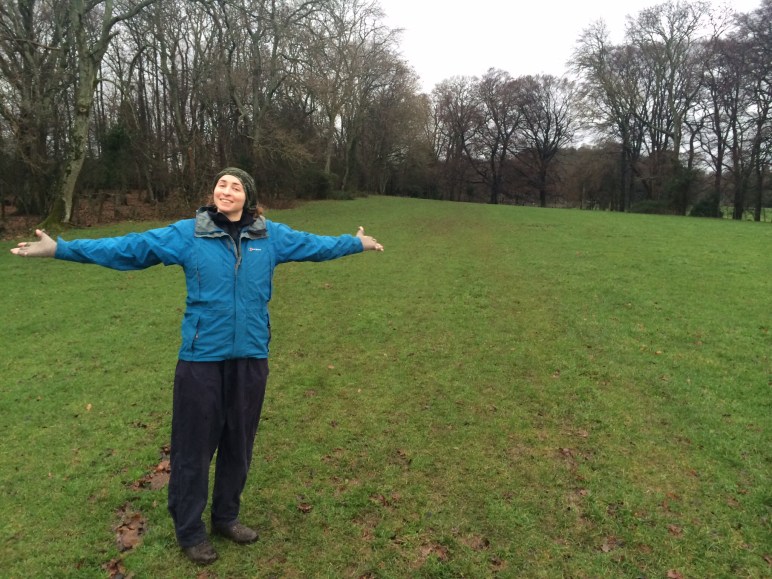
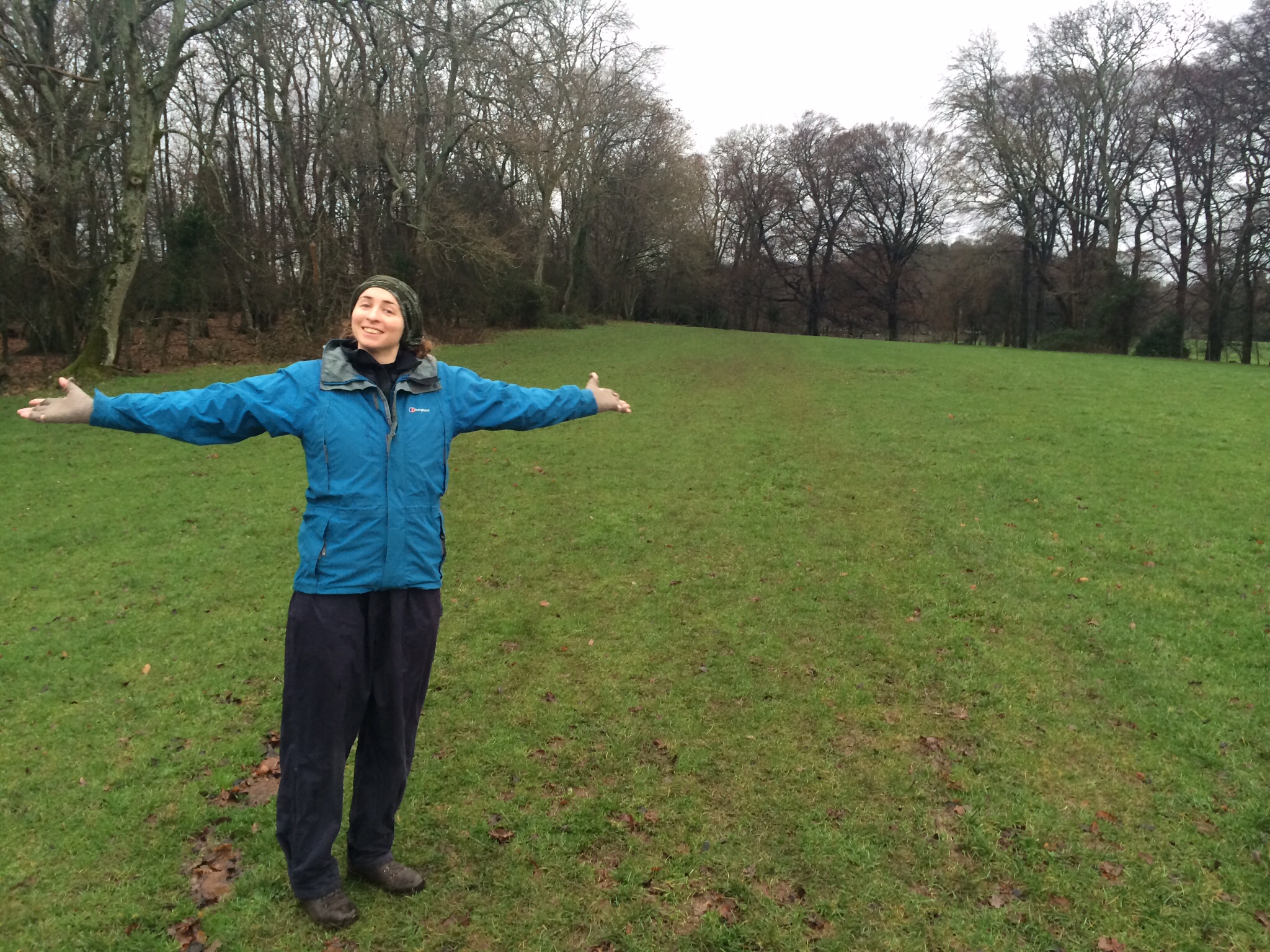
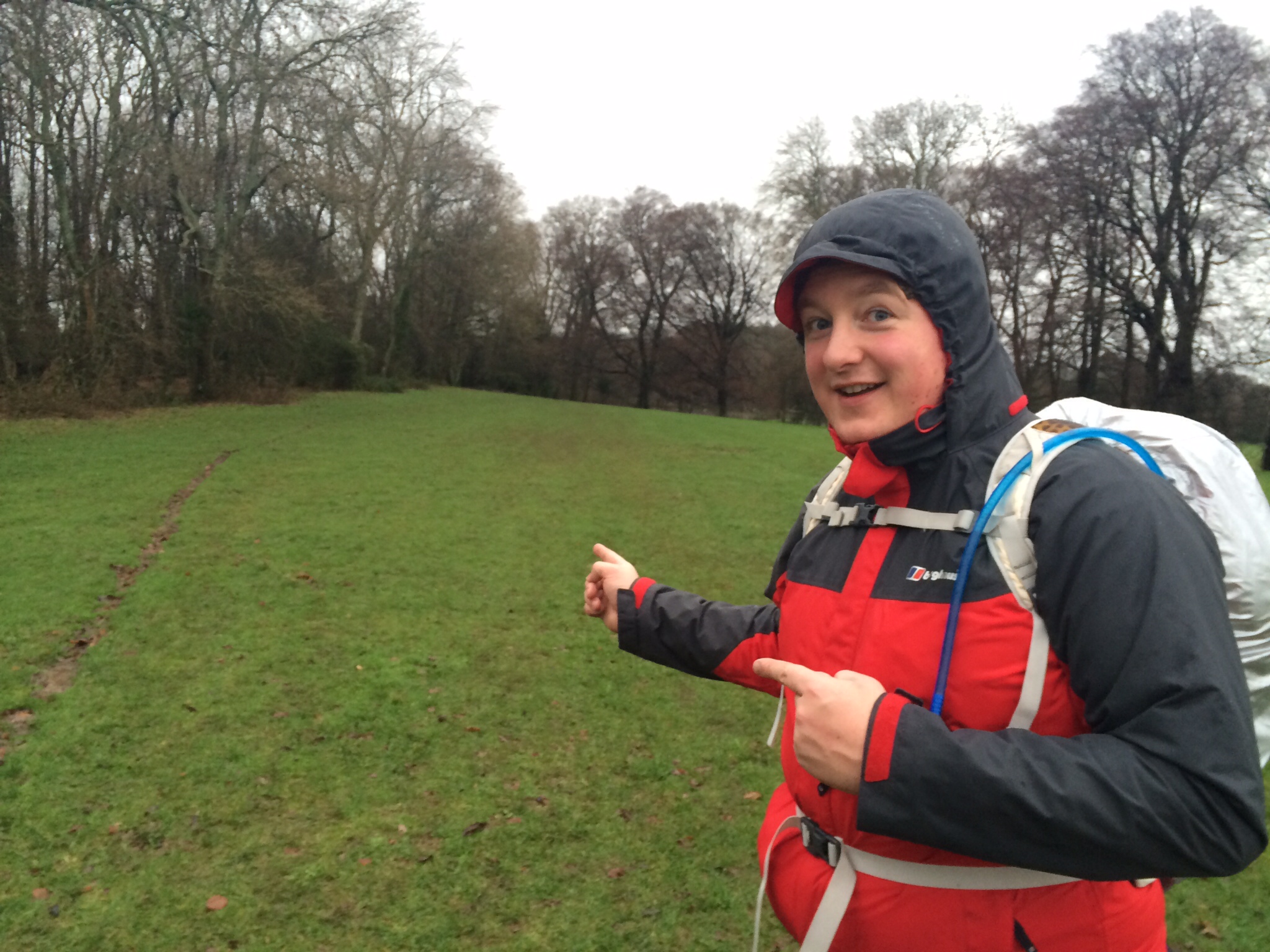
New Year’s Day saw me and Steve on a big hike up Offa’s Dyke national trail from Chepstow. It rained almost the entire time. I fell over and slid down a muddy slope and we spent the rest of the time clambering over, under, round and through a lot of lakes and fallen trees that shouldn’t really have been there. All in all, an excellent way to start the year.
After the fall…
As I was half way through writing this post, I got a call from ABC Radio Australia, wanting to record an interview over the phone. If felt like an unusual thing to be doing at 11pm on a Sunday, but was really enjoyable and fun to do. Hopefully it will be on air in the next 24 hours, and then online after that – keep an eye on the website, and I’ll post a link to it.
Big thank you to a couple of generous anonymous sponsors – we’ve still a long way to go but things are moving in the right direction. Every donation makes a real difference to the project!
We’re heading to the London Boat Show this week to see what we can raise in terms of sponsorship and support. Look out for us if you’re there Monday or Tuesday!

 Elsa was asked to write an article about how Arthur Ransome – one of her favourite authors – influenced her life, on the 130th anniversary of his birth for the Nancy Blackett Trust.





 Elsa Hammond