Elsa was mentioned in the Bath Chronicle’s article about the Bath Taps into Science festival at which she exhibited her boat and spoke about the challenge and opportunity of her row.
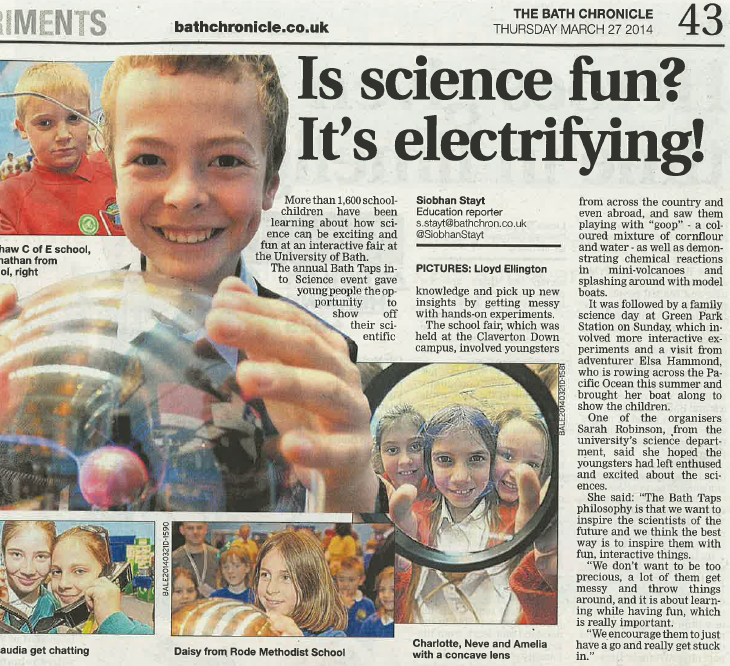
Elsa was mentioned in the Bath Chronicle’s article about the Bath Taps into Science festival at which she exhibited her boat and spoke about the challenge and opportunity of her row.
Elsa was featured on Radio 4’s Woman’s Hour, with a great interview! Click through to iPlayer and listen from 27:44.

Mariella Frostrup praises Elsa’s row in the penultimate paragraph of her Guardian column. Elsa is supporting the GREAT Initiative, which Mariella founded in order to address gender inequality around the world.

Elsa was part of the five-rower team on Chris Martin’s Jurassic Coast expedition, in Rowing and Regatta Magazine. See Elsa’s previous post for more detail.

It was scarier than I thought it would be to be stuck hanging upside-down inside the cabin, with green water lapping at the hatches, creaks and groans coming from the boat, simply waiting for it to self-right again.
With BBC Points West looking on, we capsized the boat three times in Bristol Harbour with the help of Andy and his wonderful team of volunteers on MShed’s crane, as well as the Harbourmaster’s boat.
The first attempt was just to see what would happen if we capsized the empty, unballasted boat in flat water. She lay very comfortably upside-down, making no attempt to self-right.

Secondly, I got into the cabin and strapped into my harness to be capsized – again unballasted. The boat was more unstable, but still wouldn’t self-right, even after a good four minutes of struggling.
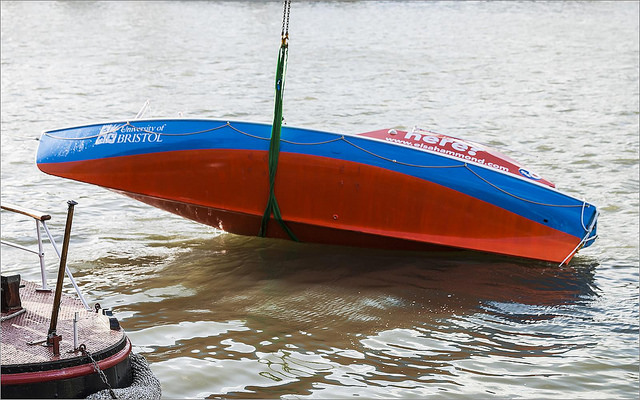
Third time lucky – we put 50kg of coal into the boat as ballast (the only thing we had to hand that was heavy enough), strapped me inside again, and capsized her. Almost immediately, she came round again.

Conclusion: ballast is very important if you don’t want to be trapped upside-down in your cabin in the middle of the Pacific!
BBC Points West coverage of the tests (with apologies to every other European crew at the end there!)
When I was speaking at the Winter School Games, I met Councillor Alan McMurray of North Somerset Council. He was really interested in my row, and invited me to speak at a Civic Lunch celebrating community sport in North Somerset. I was pretty chuffed to be speaking alongside an Olympian and a Great Britain gymnastics champion.
It was a lovely event – despite feeling exhausted from being out training with the boat the night before – and there were some great questions from the audience.

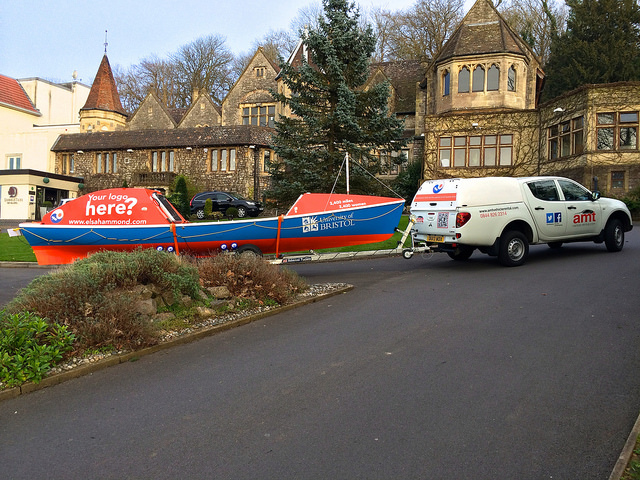
I had the boat with me, so we positioned it outside the hotel so that people could have a look at it afterwards. It made quite an impression!


 Elsa Hammond